Agentforce Marketing (Previously Salesforce Marketing Cloud)
Convert One-Way Campaigns into Revenue-Producing Conversations
Agentforce Marketing integrates AI agents with unified customer data and top-tier capabilities from Salesforce Marketing Cloud. This enables marketing and sales teams to personalise every interaction, engage buyers across all channels and improve the pipeline created from every campaign.


Why Organisations Are Exploring Agentforce Marketing
Marketing teams are expected to deliver more pipeline, personalisation, and ROI without increasing complexity.
Common challenges include:
Customer data spread across multiple systems and channels.
Campaigns that take too long to build, launch, and optimise.
Limited visibility into which activities influence pipeline and revenue.
Personalisation that stops at broad audience segments.
Marketing and sales teams working from different customer insights.
Struggling to maintain consistent engagement across multiple channels.
Increasing pressure to prove marketing impact and ROI.
To overcome these challenges, marketing teams need Agentforce Marketing. Your teams can create conversations, personalise engagement and act on customer signals in real time. That’s the edge it has over traditional marketing automation platforms that were built to execute campaigns only.
CRM Frontier helps organisations implement, optimise, and support Salesforce Marketing Cloud solutions that improve marketing performance and strengthen alignment between marketing, sales, and revenue teams.
What Is Agentforce Marketing?
Salesforce’s next generation marketing solution, Agentforce Marketing (previously Marketing Cloud), is designed to help organisations personalise every interaction, create two-way customer conversations and connect marketing activity more directly to business growth.
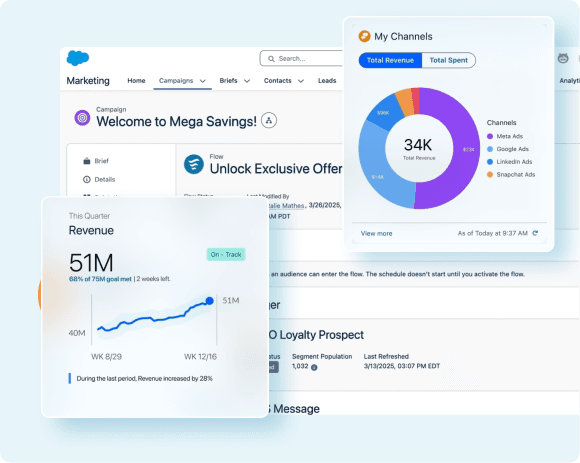
Agentforce Marketing replaces static campaigns and pre-defined workflows with AI-powered agents to help marketing teams create, optimize and scale engagement across the customer lifecycle.
From one platform, organisations can:
- Build audience segments using natural language.
- Launch campaigns faster with AI-assisted campaign creation.
- Automate nurture journeys across multiple channels.
- Engage buyers through email, SMS, WhatsApp, and web experiences.
- Personalise content and recommendations in real time.
- Connect marketing and sales around shared customer insights.
- Track attribution, performance, and revenue impact.
- Activate customer data across every touchpoint.
- Support always-on pipeline generation with agentic marketing capabilities.
This creates a marketing environment where teams spend less time managing tools and workflows and more time on meaningful customer engagement that drives measurable business outcomes.
Marketing Challenges Agentforce Marketing Solves
Marketing teams spend a lot of effort developing audience segmentation, creating campaigns, managing customer data, coordinating channels and measuring performance.
It’s a lot of work, but campaigns don’t always lead to greater engagement, higher pipeline quality or more obvious revenue contribution. Agentforce Marketing empowers teams to cut manual effort, make smarter decisions, and create more meaningful customer experiences.
Don’t Know What Is Limiting Marketing Performance?
Companies know they need stronger personalisation, better attribution, improved campaign performance, or clearer visibility into customer engagement but fail to identify the gap. Speak with CRM Frontier for an assessment of your marketing operations, technology setup, customer data strategy, and growth objectives.
Agentforce Marketing Features That Support Revenue Growth
Companies evaluating Salesforce Marketing Cloud features seek an answer to this question:
Can marketing create more meaningful customer engagement while improving pipeline contribution and marketing efficiency? The answer depends on how the platform is implemented, how customer data is connected, and how effectively marketing teams use AI and automation. The following capabilities form the foundation of Agentforce Marketing.
Campaign Creation
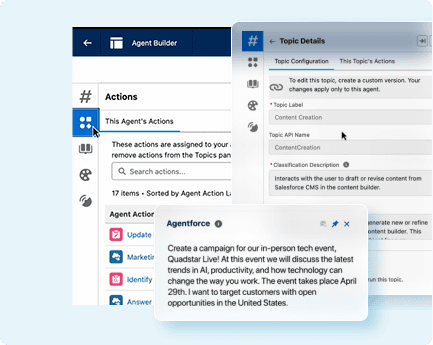
Building campaigns involves use of several tools, teams, and approval stages. Agentforce Marketing helps marketers execute faster by using AI to support campaign planning, audience creation, content development, and journey design. This reduces manual effort and helps teams launch campaigns more efficiently.
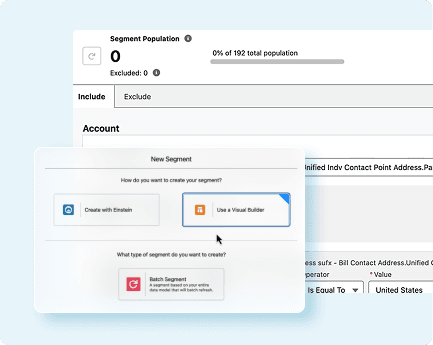
Audience Segmentation
Campaign performance depends heavily on audience quality. Agentforce Marketing lets marketers create audiences using customer data, engagement history, behavioural signals, and business criteria. Teams can build and refine segments using natural language, which helps them respond more quickly to changing business priorities.
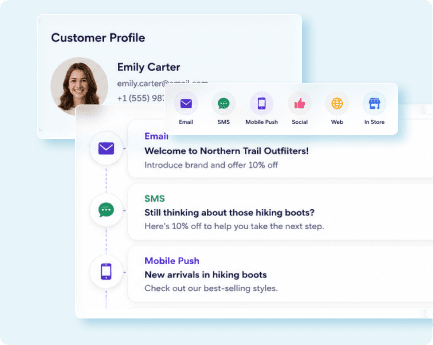
Cross-Channel Journey Orchestration
Customers engage through multiple channels before making a purchase decision. Agentforce Marketing helps companies coordinate engagement across email, SMS, WhatsApp, mobile applications, websites, and digital advertising. This helps create more consistent customer experiences throughout the buyer journey and across every important touchpoint.
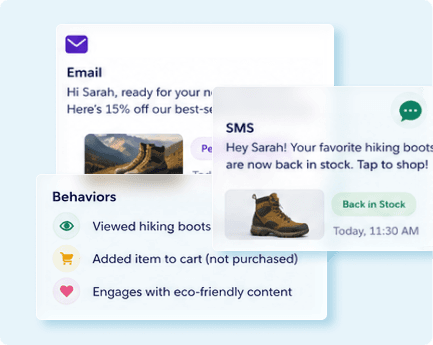
Personalisation
Generic campaigns fail to deliver strong engagement. Agentforce Marketing helps organisations personalise experiences using customer profiles, preferences, behaviours, and engagement history.
This allows marketers to deliver more relevant content, recommendations, and offers throughout channels, helping improve engagement and strengthen long-term customer relationships.
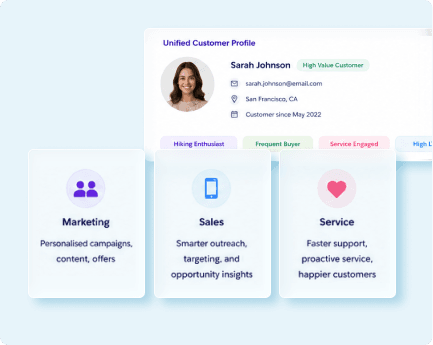
Customer Data Activation
Marketing teams have access to large amounts of customer data, but they struggle to utilise it to their benefits. Agentforce Marketing uses Data 360 to integrate customer information and make it available across marketing, sales, service, and commerce activities. This helps teams make decisions using a more complete customer picture.
Marketing Intelligence
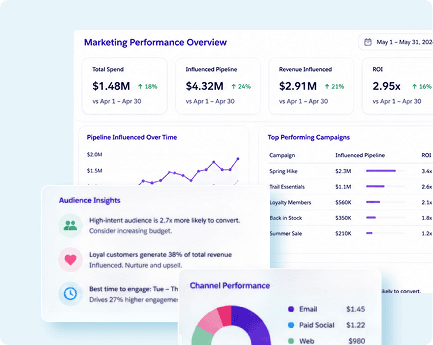
Marketing performance should be measured by more than opens and clicks. Agentforce Marketing provides visibility into campaign performance, customer engagement, attribution insights, pipeline influence, revenue contribution, and marketing ROI. Different stakeholders gain access to relevant information, helping teams make more informed decisions and investments.
AI Marketing Agents Explained
Agentforce Marketing has several powerful AI agents which help marketers create campaigns, identify audiences, personalise engagement, and support pipeline generation. The objective is to minimise manual intervention while helping teams execute more effortlessly and make better decisions.
Agentforce Campaign Creation
Campaign creation can involve multiple stages, from audience planning and content development to journey design & execution.
Agentforce Campaign Creation helps marketers accelerate this process by generating campaign briefs, audience recommendations, content suggestions, and engagement journeys using natural language prompts. This allows teams to spend more time refining strategy and less time building campaigns from scratch.
Agentforce Segmentation
Campaign performance is directly impacted by audience quality. Agentforce Segmentation allows marketers to create and refine audiences with customer data, behavioural signals and business criteria without being largely dependent on technological resources.
Teams can discover target audiences more rapidly, adapt more quickly to changing business needs.
Conversational Campaigns
Many marketing campaigns still rely on one-way communication. Agentforce Marketing introduces conversational engagement capabilities that help organisations create more interactive customer experiences across channels.
This supports more meaningful engagement throughout the customer journey rather than relying only on scheduled campaign activity.
Piper SDR Agent
With marketing and sales teams facing high volumes of enquiries, it’s tough to follow up with every lead at the correct moment. Piper SDR Agent qualifies leads, engages prospects, answers common questions, and supports pipeline growth before handing opportunities to sales teams.
This helps maintain responsiveness and at the same time reduce pressure on internal teams.
Marketing Intelligence and Revenue Insights
Marketing leaders need more than campaign reports. They need visibility into which activities influence pipeline, generate revenue, and contribute to business growth. Agentforce Marketing combines analytics, attribution, customer data, and AI-driven insights to help organisations make more informed decisions.

Marketing Intelligence
Campaign performance is only one part of the picture. Marketing Intelligence helps organisations analyse campaign performance, customer engagement, channel effectiveness, attribution trends, pipeline contribution, and revenue impact.
Campaign performance is only one part of the picture. Marketing Intelligence helps organisations analyse campaign performance, customer engagement, channel effectiveness, attribution trends, pipeline contribution, and revenue impact.

Attribution And Revenue Visibility
Companies struggle to connect marketing activity with commercial outcomes. Agentforce Marketing helps teams understand how campaigns, channels, and customer interactions contribute to opportunities and revenue.
This provides greater confidence when evaluating marketing performance and future investment decisions.

Customer Signals
Customer behaviour generates valuable signals long before opportunities become visible in traditional reports. Agentforce Marketing helps identify engagement trends, audience behaviours, and buying signals that may influence future performance.
This allows marketing and sales teams to act on emerging opportunities sooner.

Unified Performance Insights
Performance data often exists across multiple systems and reporting environments. Agentforce Marketing combines customer engagement, campaign activity, sales outcomes, and attribution insights within a connected reporting framework.
Teams gain access to a more complete view of performance without relying on fragmented reports and disconnected data sources.
Salesforce Marketing Cloud Implementation Servicess
Organisations searching for Salesforce Marketing Cloud implementation services need to understand that they need thorough guidance around:
They need guidance around:
- Customer data strategy
- Audience segmentation
- Campaign automation
- Personalisation requirements
- Attribution and reporting
- Marketing and sales alignment
- Integration planning
- Long-term scalability
This is where implementation expertise becomes important.

Why Implementation Expertise Matters
Technology can improve marketing performance, but only when it is aligned with how the business acquires, engages, and retains customers.
As a trusted Salesforce Marketing Cloud implementation partner in the UK, CRM Frontier helps organisations build marketing environments that support both current objectives and future growth.
Why Choose CRM Frontier for Agentforce Marketing Deployment?
Choosing the right Salesforce Marketing Cloud partner in the UK involves more than evaluating technical expertise. You need a partner that understands marketing operations, customer data, revenue goals, and the practical realities of implementation.
And that’s exactly why we exist.
Business-Led Delivery
Every recommendation is tied to measurable business outcomes rather than technology for technology's sake.
Marketing Transformation Experience
Our team understands the challenges organisations face when modernising campaign execution, improving customer engagement, strengthening attribution, and increasing adoption.
Integration Expertise
Customer experiences rarely depend on a single platform. We help organisations connect Agentforce Marketing with the wider technology setup so data, insights, and engagement activities work together rather than operate in silos.
Long-Term Partnership
Implementation is only the beginning. Many organisations continue working with CRM Frontier for optimisation, support, enhancement planning, and platform expansion.
Flexible Engagement Models
Whether you require strategic consulting, implementation support, managed services, or ongoing optimisation, our engagement approach is tailored to your requirements and growth plans.
Salesforce Marketing Cloud Pricing UK
Companies researching Salesforce Marketing Cloud pricing in the UK focus on licensing costs first. No doubt licensing is important, but it is only one part of the overall investment.
Several factors influence the final cost, including:
- Salesforce edition selection
- Marketing contact volumes
- Agentforce capabilities
- Data Cloud requirements
- Customer data complexity
- Integration requirements
- Attribution and analytics needs
- Implementation scope
- Ongoing support requirements
Salesforce currently offers multiple options across the Marketing Cloud and Agentforce ecosystem, including Growth Edition, Advanced Edition, and Enterprise-focused capabilities designed for larger marketing operations.
Additional products such as Data Cloud, Marketing Intelligence, Personalisation, and AI-powered marketing agents may influence licensing and platform requirements.
Additional products such as Data Cloud, Marketing Intelligence, Personalisation, and AI-powered marketing agents may influence licensing and platform requirements.
Planning An Agentforce Marketing Project?
Be it improving customer data visibility or exploring AI-powered marketing capabilities, the decisions made during planning can have a lasting impact on your marketing performance. Speak with CRM Frontier to discuss implementation strategy, licensing, customer data requirements, integrations, adoption, and long-term optimisation.
Frequently Asked Questions
Agentforce Marketing builds on the foundation of Salesforce Marketing Cloud. It has AI capabilities that help marketing teams create campaigns, build audiences, personalise engagement, and support pipeline generation more efficiently.
Key capabilities include campaign creation, audience segmentation, journey orchestration, cross-channel engagement, personalisation, Data 360, Marketing Intelligence, attribution reporting, customer data activation, and AI-powered marketing agents.
Implementation times depend on project scale, integrations, customer data needs, automation complexity and company goals. Some projects take a matter of weeks, while major transformation efforts can take months.